Tuesday, October 12, 2010

Carl Jung: the Astrologer's Senex" at Bollingen Tower


Dear Kendra~


Here’s a photo of Carl Jung’s “Bollingen Tower” that I saw the last time I was in Zurich—such a magical place! I love that he built this stone and timber tower as his sacred retreat. There’s a wall here where he painted a vibrant mural of the outstretched wings of his spiritual mentor, ‘Philemon’. You can see this colorful painting in his journal: “The Red Book” –and he painted it without benefit of electric lights—! The mural within the round tower is the heart of this space, and it has a rustic, primitive and private feeling. He would take himself here to ponder, write, and cook meals over an open fire—apparently he was quite a good cook who loved cooking in a large pot—and if you were honored to be a guest at supper, he would suggest “quietness” while eating so that the food could be truly savored.


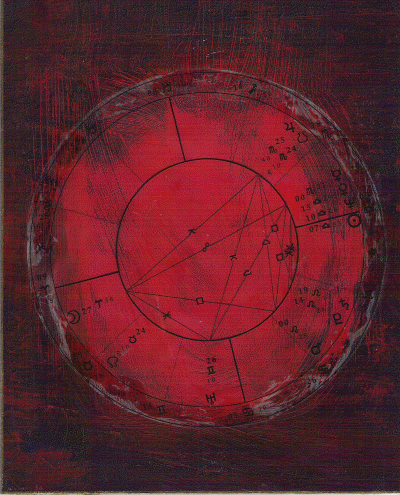
I can imagine him here, with his pipe, his paints and his….aloneness. He “attended to his inner life” and in this way he was an archetypal “senex”—the wise Saturnian elder man. Jung had a Leo Sun sign, with a Taurus Moon conjunct Pluto, and Aquarius rising.


He was also a bit of a trickster (like Hermes), and a shaman and scholar as well as a spiritual man and healer. His psychology came out of his life; he broke some rules, he kept to some. As John Perry, a friend of his noted: “There was always a little something magical about the way Jung’s mind worked. He said that he felt himself to be more shaman than psychiatrist.”


Sometimes I fear that most modern psychology, and even astrology, serves the ego’s fantasy of control, while Jungian psychology affirms “the summons to surrender to the gods”—to that which wishes to live through us…and calls us to listen to the inner archetypal voices which astrologers call planets.


Jung would counsel that we become a “disciple” to that which is calling us, and surrender to our personal discipline. A positive view of “discipline” don’t you think? Being a disciple to that which you really love? Still it’s never easy for us, nor was it for him.


His dearest friend, Toni Wolf, highly disapproved of his exploration of alchemy and astrology, but he pursued it anyway and that issue finally ended their relationship of many years. Did you know that she was his lover, companion, and ‘guide’ when he was going through his most difficult years during his Uranus opposition, around the age of forty? And that Jung’s wife, Emma, actually accepted Toni as a member of the family…so Toni would be present at Sunday meals…much more accepted in European culture at that time than it would be now! Anyway….


Did you know that Jung studied and practiced astrology for forty years before he published his work on synchronicity in 1950? He used the word “synchronicity” to explain how astrology worked, meaning that there can be a relationship between two things that don’t have a causal relationship—that is, that one event doesn’t scientifically cause the other to happen—i.e. pure cause and effect. But what is significant and necessary is that there must be an emotional meaningfulness to that moment in time. And of course, what could be more meaningful than our birth! Jung once said: “We are born at a moment in time, and like the grapes in a vineyard, we take on the qualities of the time and place from which we came.”


Jung used the birth charts of his clients to “find clues to the core of psychological truth…” (this was written in a letter he wrote to Freud in 1911). The fact that he respected and used astrology means a lot to those of us who combine psychology and astrology—which is what archetypal astrologers do.


But even if Jung didn’t have this connection, I would still be in awe of him as the archetype of the “Wise Old Man.” He honored the Mystery that we live within—that sea the Soul swims within—without getting dogmatic about it. Isn’t that the heart of wisdom; to honor the Mystery without literalizing it and without trying to make it fit precisely into concrete scientific or historical fact? Joseph Campbell later called this kind of truth a “myth” and he understood myths as revealing a very deep level of truth.


Today I feel more like a mentor in writing all this. But still the story continues here…and I haven’t heard a word yet from Alistair, even though Sophie and I will be in Zurich by noon today. I’m thinking of staying in a B & B in old Zurich if we can find a room. Perhaps I’ve honored the Saturn conjunct the Libra Sun today by writing about Jung as the astrologer’s “senex” while listening to Bach, on my Ipod. It has been pouring rain all day, and Sophie has been reading and sleeping this whole train trip—but she did tell me one thing—she has a surprise for me tonight when we get settled in our rooms….and that makes me a little fearful for some reason...yes, Saturn rules fear too...what do you think? I haven't heard from you in awhile....hope you are well, dear one~

Love,

Isabelle

Monday, October 11, 2010

Mirroring: That Which Is Above to That Which Is Below


Dear Kendra~
     I wish I could be like mythogical Merlin here, magically bestowing answers and comfort, but instead, you have me, your friend and mentor, who is more humbly "a reluctant astrologer." If I were him, I would be sharing with you how the Soul has such strange ways of mirroring the ancient esoteric saying: "that which is above to that which is below."  I would add too, that one is not to fear the dragons in the forest, but that the dragons in the psyche must be loved and appeased first.


You have serious questions about the "shadow side" of astrology--that there appears to be ways to make astrology "prove anything" because there are so many different ways of approaching this art. It's true that I don't see astrology as a science, with definitive repeatedable rules. But is anything that  "speaks" to such questions as fate, destiny, character, and cosmology, that way? I don't think we can speak of these questions that way. We can't deny our free will, and yet we can't deny the Mystery that we live within...


So, this mystery of astrology is illusive at times--with its "smorgasbord" of systems, or dialects---it  doesn't present a united front. It’s the ‘shadow quality’ of our work for sure. But there are two things that are important to remember: all astrology is here to remind us that we are part of a larger cosmos, plan and purpose, and that we can trust in a pattern that is greater and wiser than ourselves. People need to know that. They need to see how their particular story, with all of its gifts and woundness is part of a larger sacred story. And I believe, as the ancient Hindu's believed, that "Goodness" exists at the heart of it.


We go to astrology because we want “to know ourselves” so we can make better choices—but we want to know about ourselves without someone pathologizing, shaming or blaming us. We want to understand why we do what we do, and astrology—no matter what “dialect system” it uses—gives us a way to talk deeply about ourselves and our inner struggles.


But you ask about the different "language dialects" between systems---such as the Vedic vs the Western, or the different house systems, such as Placidus vs Koch....well, I think most astrologers are simply drawn to a person who uses a particular method, and who shows them that it works --not tells them! And then they find a way to work within that language system as well. Astrology is like a romance language, derived from a similar root, and a "table is a table" whether we name it in French or Spanish. A table exists, just as a language exists, so it's ironic when someone says "I don't believe in "astrology" because I then feel like saying: "You don't believe in Spanish or French either?"


And of course, just because one person primarily uses the birth chart and asteroids and another relies on planetary progressions and transits, doesn’t make any of them wrong or better. It's a language that speaks to the Soul, and different dialects speak clearer to some people more than others. The ideal in any system is to be able to see a theme repeated several times in different ways—sometimes called the rule of three: you see a theme repeated three times, you know that what it points to carries weight….some truth.

So not only are systems, orbs, aspects, and "readings"  not perfect “black and white” paradigms, but people are often profoundly paradoxical! Like the planets that are held within the mandala of the chart, people have many sub-personalities, and are constantly in the process of changing as well! What underlies a good reading-consultation often has much less to do with the mechanics of the astrologer’s technique than something else--something most astrologers use almost unconsciously. Let me get back to this in a moment....but first your question--


Underlying all astrological technique is the shadow of the unspoken fear--- is there a better way or a more accurate way to do this? How do I know if this is the best way? These thoughts are uncomfortable, and most of us confront that nagging uncertainty by being certified within a certain tradition, or we proclaim to offer an eclectic approach depending on the circumstance and client.


As a counseling astrologer, you know that I went back to school in my forties to get a Master’s degree in counseling psychology (with an emphasis in the work of Carl Jung.)  And most of my astrology teachers used the tropical Placidus house system, and viewed the planets as mythological archetypes within a spiritual mandala. They saw the transits and progressions as challenging turning points along the process of individuation. I liked that! I liked seeing how the astrological elements related to the Jungian modes of sensing, thinking, intuiting, and feeling. And I liked Steven Forrest’s evolutionary astrology and Alice Howell’s wise “kitchen table” wisdom. I liked Jungian astrologer Liz Greene’s depth as well as other British astrologers…. so I find that my eclectic brand of astrology fits ‘just enough.’ And when asked: Is astrology based on science, or synchronicity? I launch into Jung’s theory of synchronicity, and I’m off and running…that's my style.


But I’m still uncomfortable with variations of your “shadow question” such as—if the precession of the equinox’s is true, then isn’t Vedic more accurate in the predictive sense? And if the asteroids are archetypes why not use them more? And how can I justify my use of orbs and aspects? I don’t know, but I am most “reluctant” when it comes to predictive astrology, such as the Vedic, because we truly can’t know how anyone is going to “play out” their signs and aspects. We can’t step on anyone’s free will choices, and isn’t that wonderful?


I like to think that just as a carpenter will have his or her own reasons for using a particular tool for a given situation, we also need to have many tools and techniques for different people and questions. We might want to say, unlike using an authoritative text such as the Bible, that astrologers have to intuitively choose which technique to use to draw forth a response---and that what is more important is that we should be trying less to prove a point than to inquire into the client’s truth.


My bias is that my best “readings” are not the ones in which I rely heavily on prediction, but when the metaphors I use allow the client to see deeply into their life. I know this is happening when they start talking more than me, and when they start looking at the question behind the question that they presented initially. And isn’t the point--- to put the technique secondary?


So perhaps the answer is to be found in finding that “sacred place or temenos” where we engage with our Self or with our client in a way that resonates with the process of deep inquiry? Does it matter what astrological language we use? Perhaps it’s not about the Jungian evolutionary approach, or the Vedic approach, as much as it is about affirming what we, or our client, already knows to be deeply true.


So….what do we want? I think the hope is that there will be a synchronistic moment of “ah-hah” when there’s been an accurate mirroring of that which is above, to that which is below. Isn’t that what we long for---when some piece of the client’s truth and the astrologer’s technique rise up to a little epiphany together! Ahh…. then there is that felt moment of meaningfulness that makes all considerations of proof of technique secondary.


And so this is what I offer you: the idea that the technique that brings in the "magic of synchronicity" is already embedded in most systems---the idea of  deep listening and creating moments of connection and silence. Perhaps that is our only safeguard in truth-seeking; not forcing our predictions or symbolism or bias on our client, but honoring instead the idea that we are acting as Hermes did—as a communicator; as an instrument of the Divine.


We are looking at the Shadow—that’s delicate work! We’re looking at the blueprint of the psyche, and in those moments of listening with the heart we get a chance for the Spirit to enter; for what the Jungians call the numinous moment--- when we—or our client-- look at the chart and see the answers projected there---upon the clear sky of the heavens above and the gods within.


Ah…feel like I’m waxing a bit poetic here—but you got me going! Hope this helps~

Love,

Isabelle

Friday, October 8, 2010

You Can Make Astrology Prove Anything!


Dear Isabelle~


Sometimes I think you can make astrology prove anything. Isn’t it like the Bible—the way you can just pick the right verse and chapter, and prove anything?! I can imagine you can make a case for God’s approval or disapproval, or for Destiny’s "Astrological" approval or disapproval, on almost anything in the chart—?


Look at the choices we have—look at what astrology has in its toolbox: mid-points, solar return charts, transits, fixed Stars, progressions—just pick the question, choose your attitude and response, and you can back up anything you want to say with some aspect…why not? We can use Vedic, Sidereal, Placidus, or Koch systems, and then add an evolutionary, predictive, or psychological bias....and...does it really come out the same then... is it really all ‘under one sky’? And if so, how do I know what’s the best approach to use? Sorry if I sound like the great skeptic, but even you have called yourself the “reluctant astrologer.” What do you mean?


Warmly,


Kendra


PS Why are you going to Zurich? Are you going to see Carl Jung’s house? Or is it because Alistair is at the Krishnamurti center near there? I hope it goes well…especially with Sophie—I hope she can be open to it all.

Thursday, October 7, 2010

Saturn in Libra: Pain, Possibility and Paradox

                                                 
Saturn’s in Libra till February, 2012, but today October 7th, there’s a New Moon in Libra: the Sun and Moon are conjoined at the same degree and the “Reality Cop, Mr. Transiting Saturn” has just joined them---what a powerful “Call” that is to getting our relationships right! No blaming or shaming allowed, just do what needs to be done and make an attitude adjustment. I wish it was as easy as planting a potent seed.


In this “New Moon/Dark of the Moon” we are advised by the Farmer’s Almanac to “plant the new seeds.” Astrologers also remind us to plant our “new intentions like seeds” at the New Moon and not to disturb the seeds as the New Moon waxes towards the Full Moon. Then we see what we have planted. At Full Moons we can see clearly, sometimes get an epiphany/aha! Moment, and sometimes we feel “crushed” that the seeds didn’t germinate.


With serious Saturn being in “fair minded Libra”-- the sign of the weighing scales-- we often forget how unbalanced the process of weighing and balancing really is—! It’s been said that Libra holds more stress internally than any other sign, and is more like a finely tuned violin than a balanced symphony. Libra holds the tension of the opposites, and tries to do it with poise, but seldom do people know that the pressure of holding opposites, paradoxes, and ambivalence takes a great psychic toll. We all have Libra in our charts somewhere, and with Saturn in Libra for all of us now, we will collectively feel this pressure.


At this New Moon I’ve decided to plant the seed of hope for reconciliation between the three of us: me, Sophie, and Alistair. Writing about this in the journal helps do this, but I’m hoping that I can find some symbolic act, or ritual, that will indeed plant this seed. Do I dare talk this way to Sophie? Can we find a bridge between her Christian fundamentalism and my astrology? Does she even want to bring us closer, or is she still holding the pain and resentment of my leaving her Dad?


I know I will send something of this journal entry as an email to Kendra… should I mention the “gift of insight” this Saturn in Libra time has given me….? Does she know already know how I see both her and Sophie similarly? --and that I’m hoping that Sophie will someday see me in the same light as Kendra does? I don’t want Kendra to see herself as a substitute daughter, but I now see my yearning for closeness with Sophie…is this possible between mothers and daughters? Sad that it took the near-drowning of Sophie in Lindisfarne to make me realize how much I love her.


Ah…the mentor relationship with Kendra is so much easier, less emotional. Sophie and Kendra are about the same age, although Sophie has an Aries Sun not a Scorpio Sun, and she has an Aquarius Moon instead of Kendra’s Cancer Moon. The Aquarius part of Sophie can see the larger picture and be more detached at times, but Sophie’s Aries Sun will spur her on to doing things she thinks she cannot do—it will test her, and give her courage in the process. Her firey Aries Sun and airy Aquarius Moon are so different than Kendra’s watery Scorpio Sun and Moon. And me: an air-sign Libra with a fiery Aries Moon. Hah! Strange to think how Sophie and I have what astrologers call “the natural compatibilityof the Sun of one person matching the Moon of the other”…but….she is so very much her own person, and I am too…and that’s how it should be. Saturn in Libra though, is calling for bridges to be made.


So here we are--Sophie and I on the train to Zurich. She’s silently reading a book about Celtic Spirituality and I’m journaling on my computer, wondering how much of this to send to Kendra…and what Sophie and I can do to plant the seed of reconnection. Ah…she just put down her book; better turn this off--

Sunday, October 3, 2010

Private Journal: Saturn's Gift: "Inspired Melancholy"


This morning I've been reading that the medieval astrologer, Marsilio Fincino, was the first to express the “gift of Saturn”—namely that Saturn can be the midwife of insight. This is because depression, or “melancholia” as he called it, creates a permeable boundary between consciousness and unconsciousness, and allows us to adjust real issues that have gotten out of hand—our personal unfinished business. He says inner reflection, or depression, is experienced like a “falling into ourselves” that brings us to the point where we are no longer able to continue with life in the usual way....why? Because we’re not nourished any longer by what is—by what the ego has achieved and what the world has given us So we begin creating a bridge: first insight, then action, then change.


Sounds good, but at the moment I can feel the “melancholia” with Sophie, and I don’t have insight into what she’s thinking, so the feeling hangs in the air between us today like a gray mist. I wonder how we lost yesterday’s magical synchronicity at Whitby?


So as I sit here journaling (waiting for Sophie to get up this morning) I’m reading about how Saturn times can return us to states of contemplation, peace and equilibrium—or it can lead to what Carl Jung called “enantiodromia” –a complete and opposite change of attitude. This is when a condition is so polarized or severe that it polarizes into its opposite. I wonder if some of that is brewing.


During Saturn Returns and transits we are more permeable to feeling the defeats of the ego and we feel unseen and often lacking direction. Jung would say this space needs to be “held and allowed” until Saturn brings its gift of insight, creating a bridge for the Self to cross over into a truer destiny path. Jung talked about this in “holding the tension of the opposites” till the third way (the inspiration) is made clear. It arises from the depths of melancholia.


 I wonder how this is all playing out with transiting Saturn conjuncting my Sun now….I guess I’m living into it, rather than merely writing about it. When Sophie wakes up, we will decide if and when we are really going to get on that train and go visit her father…or not. We will see if there is still anything between Alistair and I...and I’d like to visit Carl Jung’s place as well…


Hmm….it seems as if astrologers either want to make light of Saturn transits, or tend to make them the opposite—fearful. I lean towards seeing the positive restructuring that Saturn wants to build, but I’m aware that it’s a mistake to turn the darkness of Kronos (Saturn) into too much of a good thing—for this would miss the fact that what appears to be the dark night of the Soul still is dark (!)--a “Nigredo” experience—even though it’s the awakening of imagination. Before movement, there is no movement, or stuckness.


I am waiting for Sophie to get up this morning. She’s a late sleeper. Yesterday she explored Whitby by herself for awhile, while I retreated to our rooms to rest and read…and even with my books and journal I feel this touch of melancholia—it’s true, Saturn is on my Sun, and I haven’t seen the bridge to the future yet. I wait for insight.


 “Saturn marks off the stages, the ages, separating time, history and the past. We lose energy as we move through this passage, as we are called to dance with an invisible partner. The antidote to Saturn is Jupiter, the planet of expansion, grace and opportunities, and Venus, the planet of love and connection and beauty.” I wait for Sophie….and then…? Will I wait for Alistair? Is he waiting for us? I wish one could take a dose of Venus and Jupiter as easy as one can take vitamin supplements….ah…I hear a stirring from the bedroom….